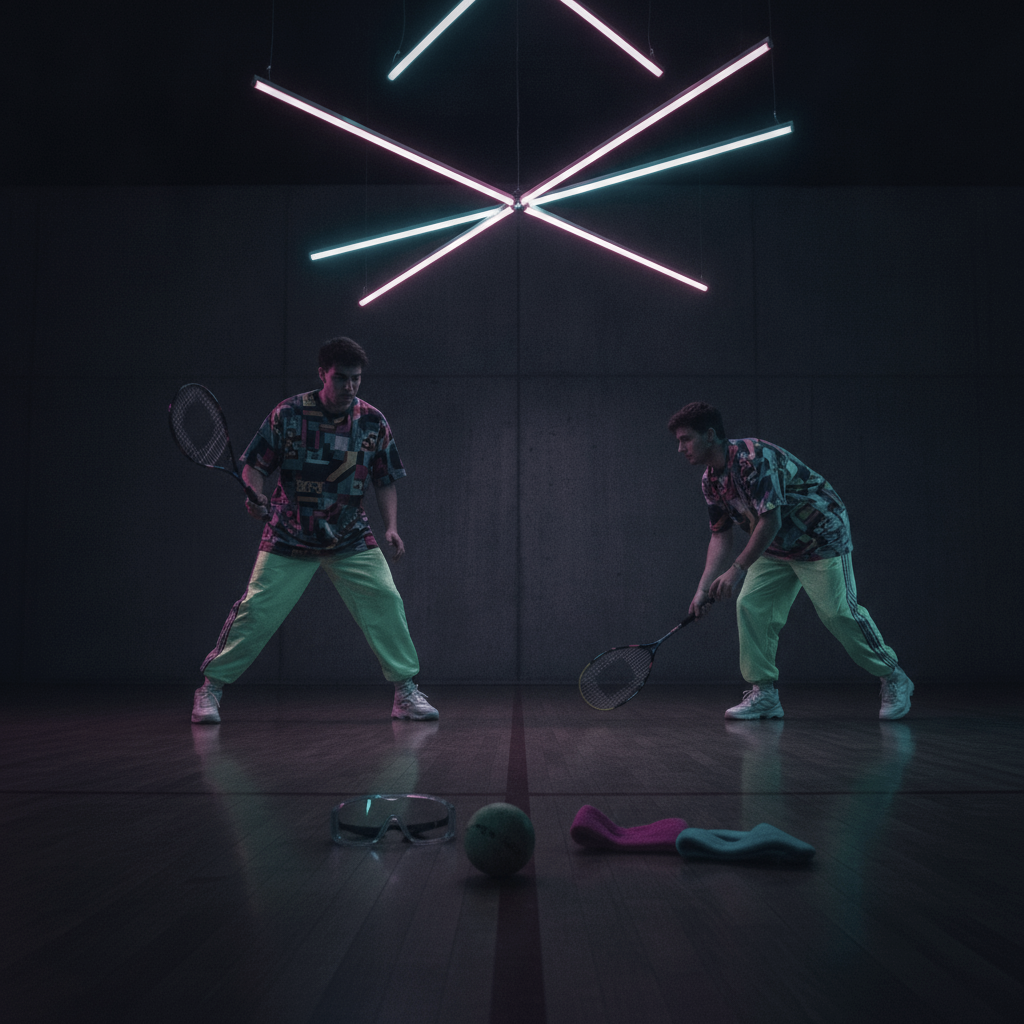
The drive serve is the closest thing racquetball has to a free point, and most players leave speed on the table because they treat it as a swing instead of a sequence. Speed comes from the chain — legs, hips, trunk, arm, wrist — firing in order. Train the chain and the miles per hour follow.
Start with the toss, because everything downstream depends on it. A consistent low drop, out in front of your lead foot, lets you meet the ball at full extension. If your contact point wanders, your speed wanders with it. Drill the toss alone, no swing, until the ball lands on the same floor spot ten times running.
Now the overload block. Grab a slightly heavier frame — this is where a 190g flagship earns its keep in practice — and hit ten controlled drive serves at seventy percent effort. The extra mass forces your legs and trunk to drive the swing instead of your arm muscling it. Then switch to your match racket and hit ten at full effort. The lighter frame will feel like it disappears, and your hand speed jumps. That contrast is the whole point of overload training.
Sequence the block: toss drill, ten overload serves, ten match-frame serves, ninety seconds rest, repeat three times. Twice a week. Film one set on your phone and watch whether your hips open before your arm comes through — if the arm leads, you are throwing away the biggest link in the chain.
Ten miles per hour is not a fantasy number. It is what returns when your legs drive, your hips clear, and your contact point stops moving. Build the sequence, and the serve gets heavier on its own.